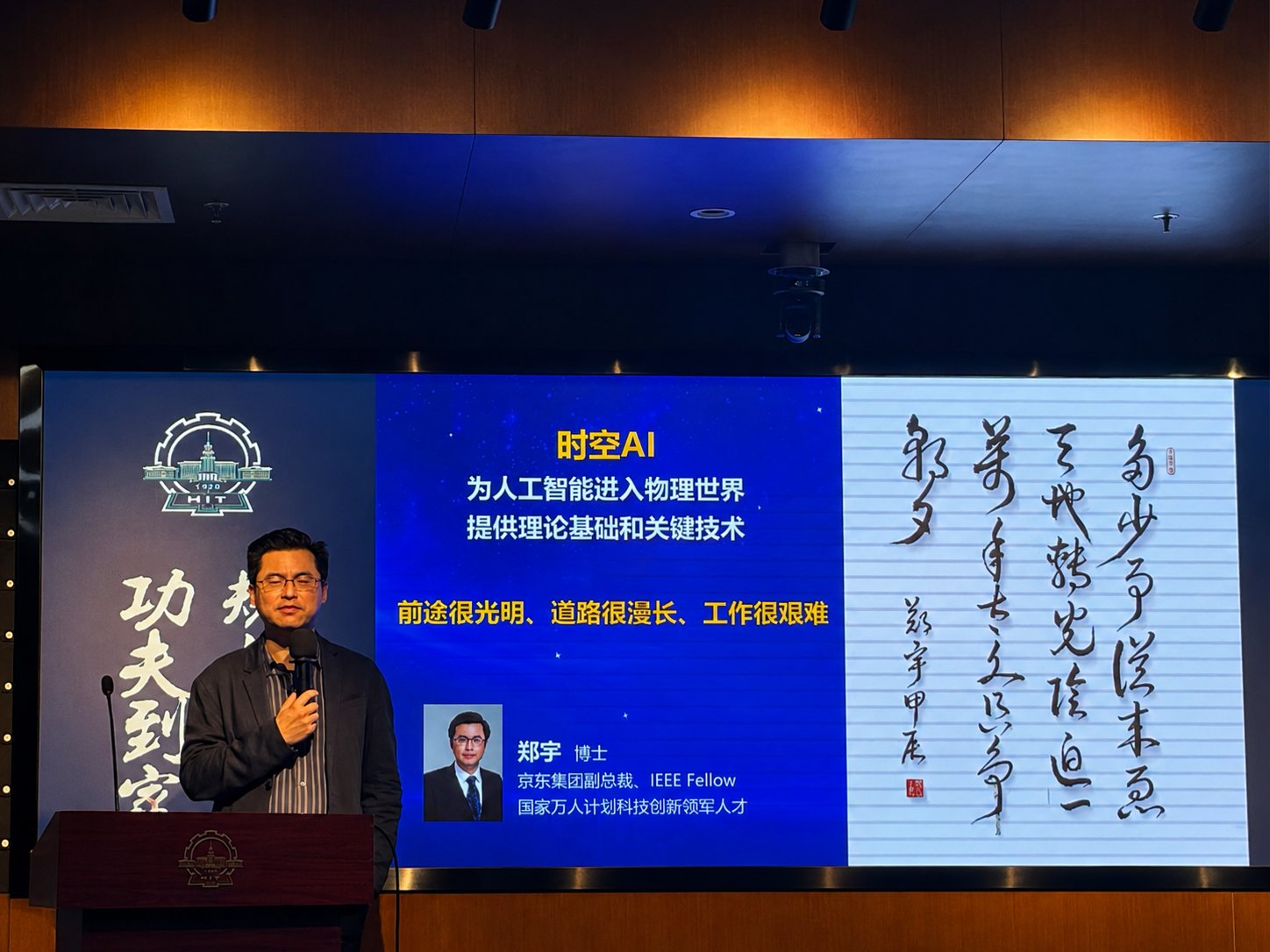
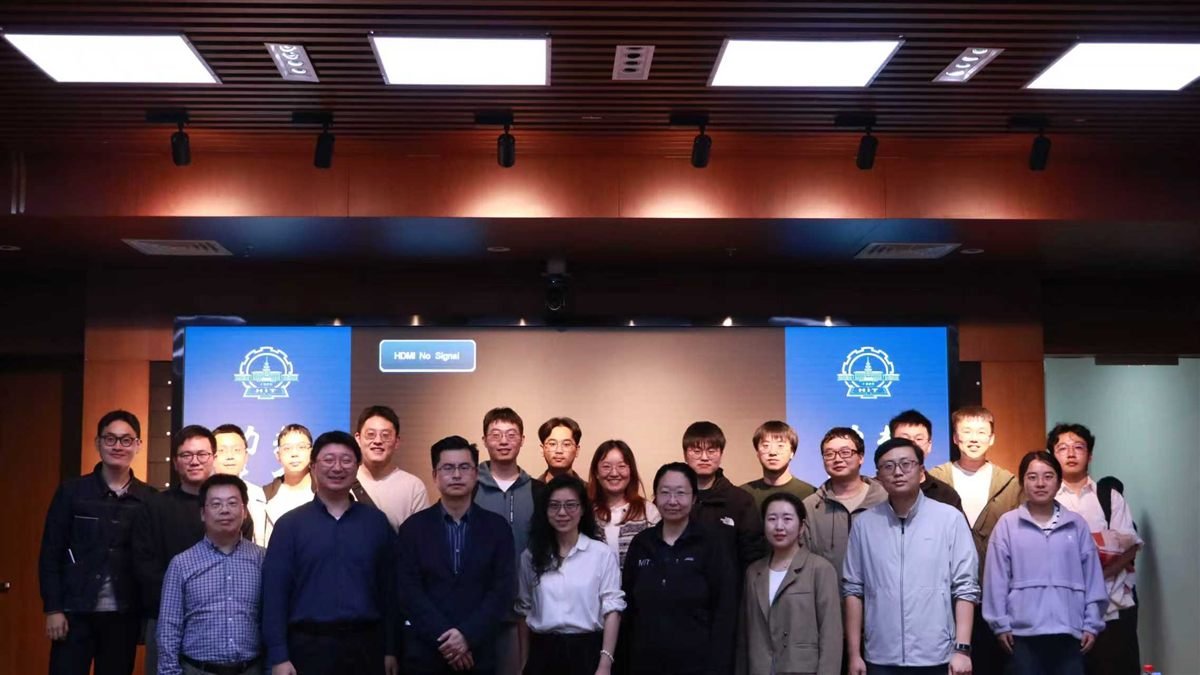
郑宇教授作“时空AI:人工智能进入物理世界的基础理论和关键技术”学术报告 Professor Yu Zheng Delivers Academic Talk on “Spatio-Temporal AI: Fundamental Theories and Key Technologies for Bringing AI into the Physical World”
2025年12月11日,应周逊教授邀请,京东集团副总裁、首席数据科学家郑宇教授在哈尔滨工业大学(深圳)信息楼L栋203作题为“时空AI:人工智能进入物理世界的基础理论和关键技术”的学术报告。
郑宇教授为IEEE Fellow、ACM杰出科学家、KDD China主席,国家“万人计划”科技创新领军人才,现任西南交通大学人工智能研究院院长、上海交通大学讲席教授。郑宇教授开辟了城市计算研究领域,论文被引用6.5万余次,H-Index 114,两次获得SIGKDD Test-of-Time Award,并四次获得SIGSPATIAL 10-Year-Impact-Award,在城市计算与智慧城市领域具有重要影响力。
报告中,郑宇教授指出,人工智能虽然在虚拟世界取得了突破性进展,但要进一步进入真实物理世界,仍需要面对时空约束、物理规律、数据采集成本高、观测不充分以及跨领域知识融合等一系列挑战。现实世界中的行为和现象通常以时间和空间为基本观测维度,因此,充分理解并利用时空数据的特性,是人工智能认识和建模物理世界的重要基础。围绕这些问题,郑宇教授系统介绍了时空AI的定义、发展历程、主要挑战与解决思路,并结合关键技术和典型案例,阐述了如何利用时空数据特性,为人工智能进入物理世界提供基础理论和关键技术支撑。
On December 11, 2025, at the invitation of Professor Xun Zhou, Professor Yu Zheng, Vice President and Chief Data Scientist of JD Group, delivered an academic talk at Harbin Institute of Technology, Shenzhen, titled “Spatio-Temporal AI: Fundamental Theories and Key Technologies for Bringing AI into the Physical World.” The talk was held in Room 203, Building L of the Information Building.
Professor Yu Zheng is an IEEE Fellow, ACM Distinguished Scientist, and Chair of KDD China. He is also a leading talent in scientific and technological innovation under China’s National High-Level Talents Special Support Program, Dean of the Institute of Artificial Intelligence at Southwest Jiaotong University, and Chair Professor at Shanghai Jiao Tong University. Professor Zheng pioneered the field of urban computing. His publications have received more than 65,000 citations, with an H-index of 114. He has received the SIGKDD Test-of-Time Award twice and the SIGSPATIAL 10-Year-Impact Award four times, and has made significant contributions to urban computing and smart city research.
In his talk, Professor Zheng noted that although artificial intelligence has achieved major breakthroughs in the virtual world, its extension into the physical world still faces a range of challenges, including spatio-temporal constraints, physical laws, high data acquisition costs, incomplete observations, and the integration of knowledge across different domains. Since behaviors and phenomena in the physical world are fundamentally observed through space and time, understanding and effectively utilizing the characteristics of spatio-temporal data is essential for AI to model and understand the physical world. Addressing these challenges, Professor Zheng systematically introduced the definition, development, major challenges, and potential solutions of Spatio-Temporal AI, together with its key technologies and representative applications.